unlock new levels of visibility with
custom hardware & data capture
We design & deploy enterprise solutions to meet specific client need.
We are sector-agnostic, with expertise across system design, data capture, & analytics.
Our solutions enhance data collection & connectivity, allowing clients to streamline operations, resourcing & spend.
Bespoke Sensing Solutions
Integration & Enablement
AI Automation
Insight Delivery
select clients & cases
-
Pets at Home is continuously investing in its sites to improve the in-store experience for customers. Recently, the group introduced a range of Pets-branded merchandising fixtures and engagement points, including product spotlights and interactive screens.
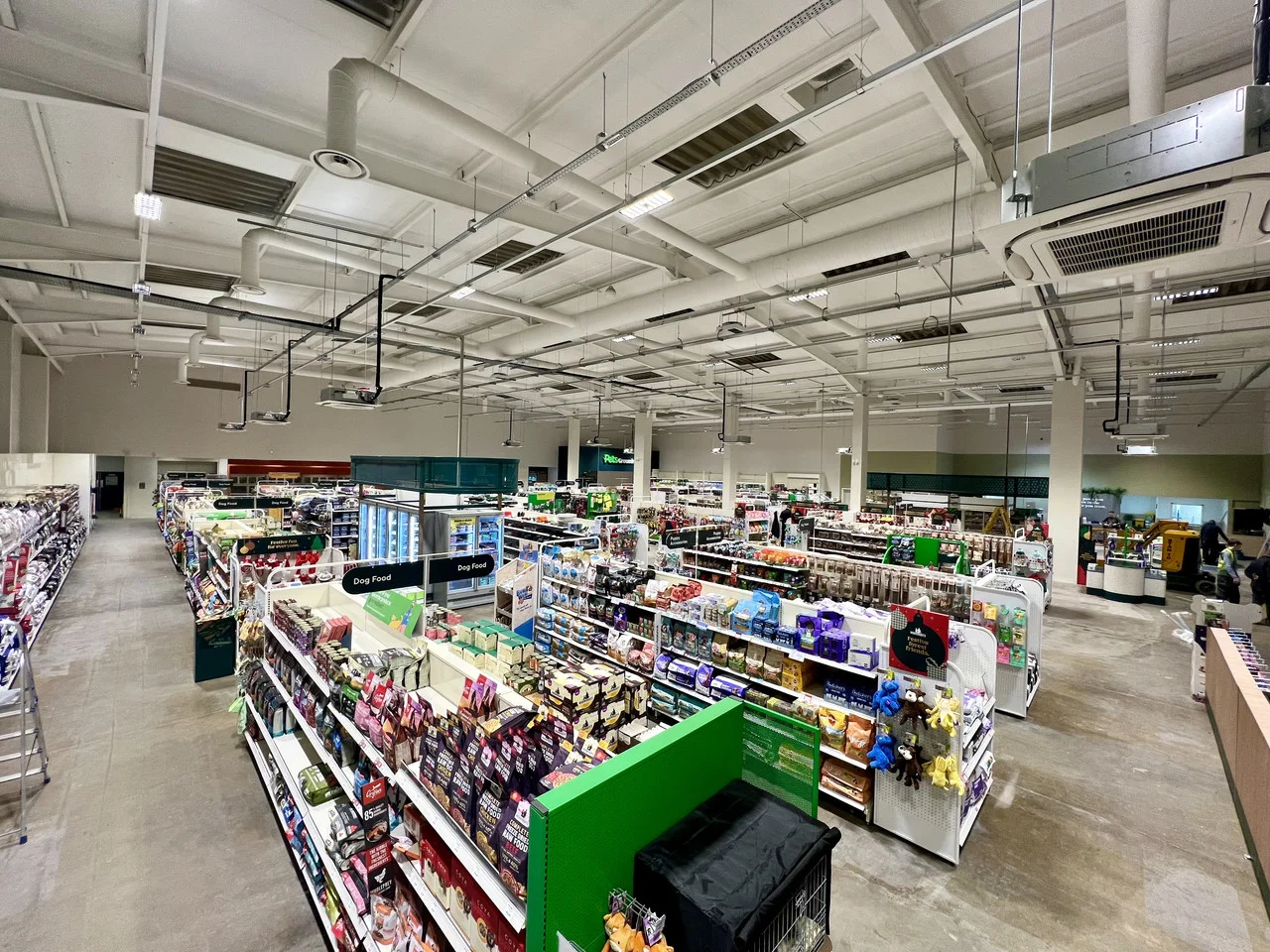
However, Pets at Home had no data on which fixtures customers found engaging and which were less appealing. The group did not want an expensive camera-based system and instead opted for Pemberton Digital’s privacy-first, radar-based solution to measure customer interactions in-store.
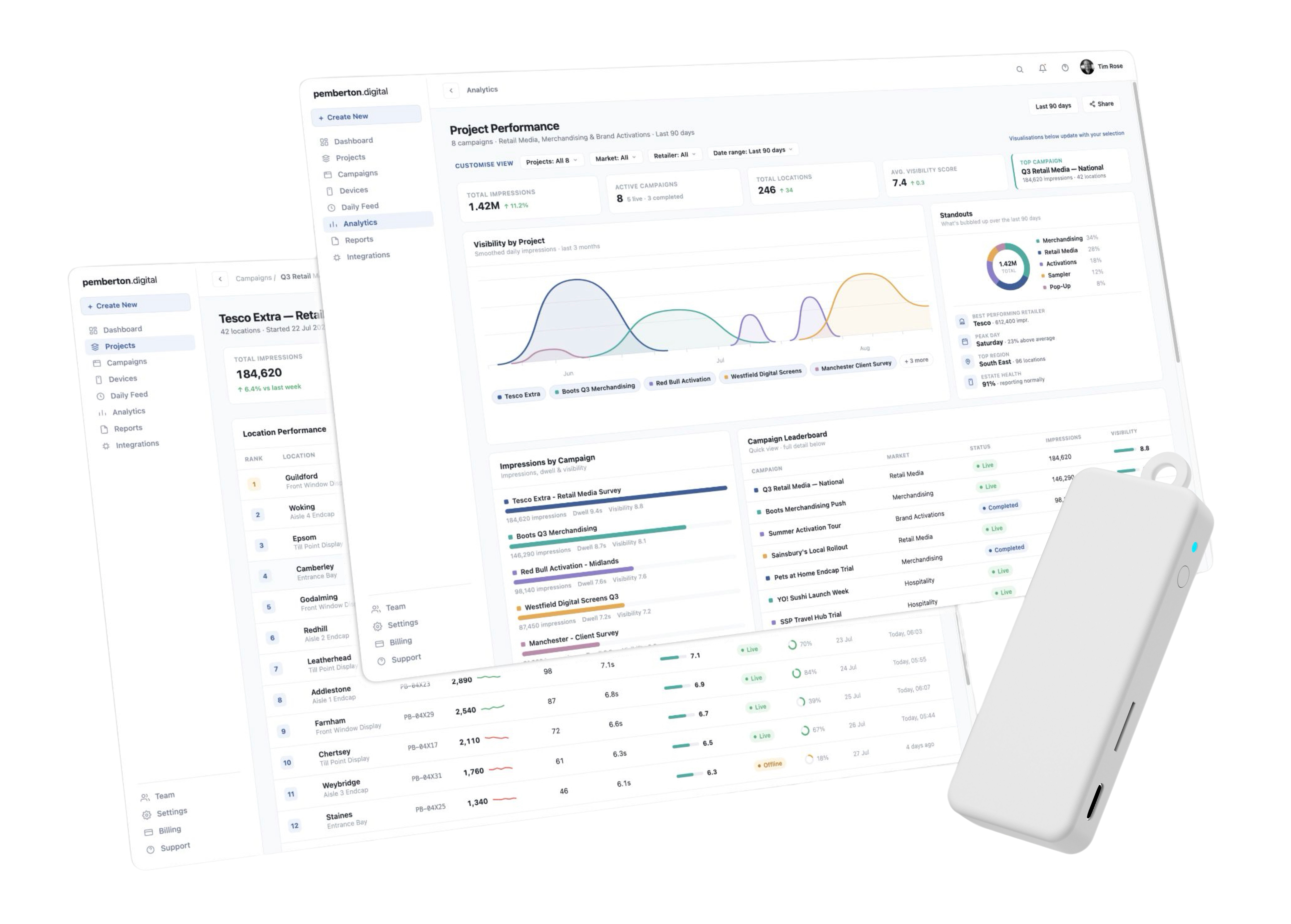
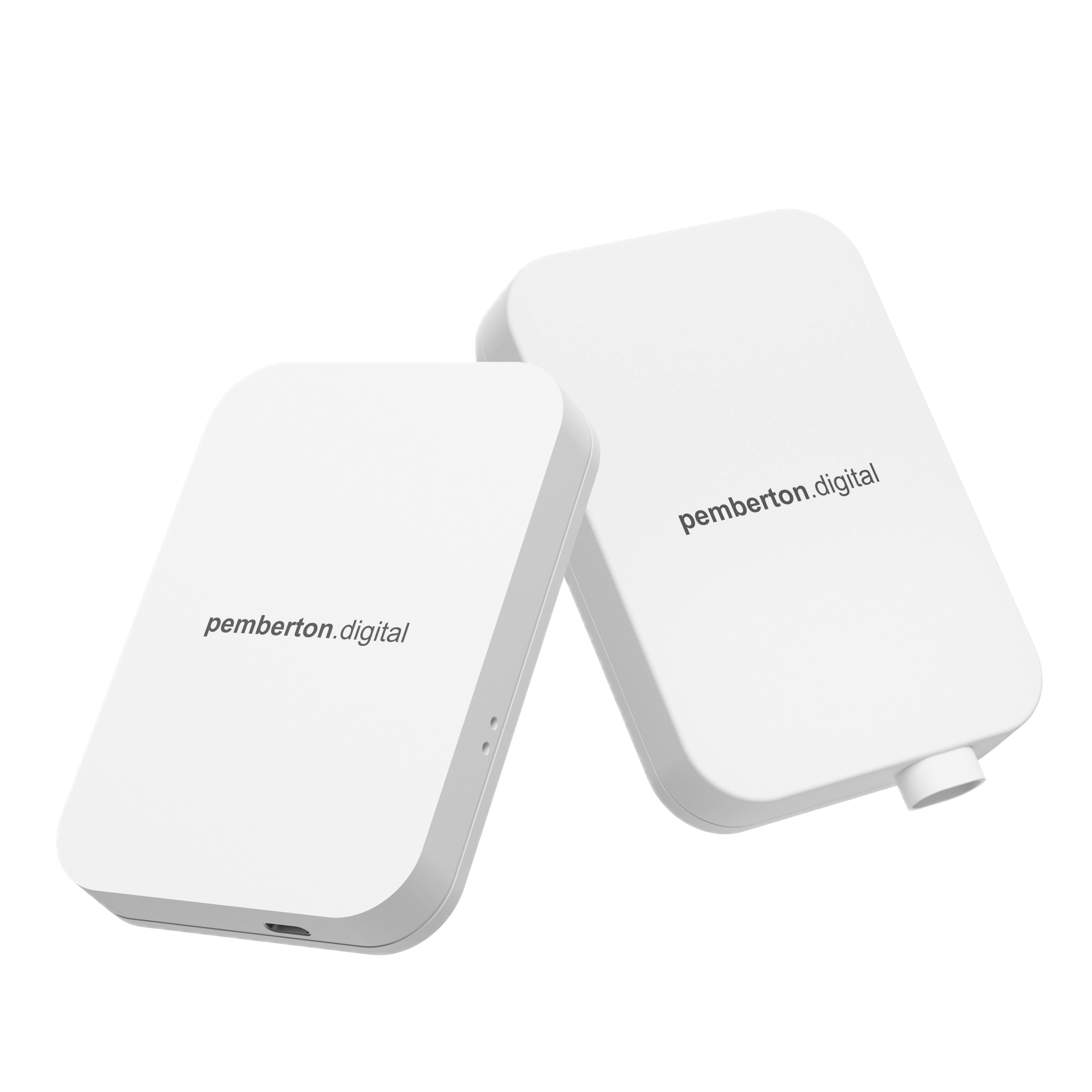
Pemberton Digital deployed mmWave advanced occupancy sensors at strategic locations in-store to capture customer flow and dwell. The client-facing product was a digital floor plan and dashboard, reporting key appeal metrics:
Impressions – the number of customers who passed the fixture
Engagement – the number of customers who paused at the fixture
Browse time – the average time customers spent at the fixture
The Result.
Using real data captured in store, Pets at Home gained a clear view of how its merchandising and engagement points were performing. This insight allows the business to continuously refine in-store features and make better-informed decisions about which fixtures to include in future refits, improving the customer experience while avoiding unnecessary spend.
Why It Works
Pemberton’s solution met Pets at Home’s requirements around privacy, scale, and cost, providing access to behavioural data that had previously been difficult to capture. The underlying technology is well suited to large, open-plan trading areas, making it a practical and deployable solution for Pets at Home’s large-format stores.
^
-
BoxxDocks is a logistics technology company that tracks reusable crates carrying high-value items through supply chains. Their platform gives operators visibility into where assets are, how they are being used, and where loss, delays, or inefficiencies occur.
As part of the development of their tracking system, BoxxDocks required a custom hardware component to support reliable, low-cost location and identification of crates at scale. This involved designing the embedded electronics used within their tracking tags, optimised for large asset fleets and demanding operational environments.
Pemberton Digital designed and developed the embedded tracking hardware, including the core chip-level architecture used for asset identification and location sensing. The result was a production-ready hardware component that integrated seamlessly into BoxxDocks’ wider system, enabling their software platform to deliver accurate, scalable crate-level tracking.
^
-
K10 is a quick-service restaurant chain serving the City of London’s lunchtime rush. With a narrow service window, maximising throughput and conversion is critical to success.
As operators like K10 scale across multiple locations, maintaining visibility at site level becomes a challenge. Multi-site managers are stretched between stores, making it harder to intuit busyness, manage queues, and optimise staffing. Reliable data is required to plan and resource effectively.
Pemberton Digital deployed a queue detection and reporting solution using a single ceiling-mounted mmWave sensor positioned above the service counter and within reach of the store entrance. The system:
Tracked footfall and total occupancy
Measured queue length, customer wait time and peel-off
Reported trends, anomalies, and alerts via a central dashboard
Why it works
Recognising and addressing service bottlenecks improves throughput, margins and profitability, particularly during compressed service windows. Pemberton’s lightweight, cost-effective and fully private solution operates independently of existing store systems, making it a practical alternative to video-based solutions, which are often costly and overbuilt for most hospitality environments.
^
-
Airbus engaged Pemberton Digital to update and test antenna designs used on its Zephyr programme – a high-altitude, solar-powered autonomous aircraft. The goal was to modernise legacy designs, make them easier to reproduce at scale, and confirm they performed reliably in real-world conditions.
Pemberton worked with Airbus’s engineering team to prototype and test the antennas, refining performance and documenting a repeatable manufacturing process that meets recognised quality standards.
The antennas supported Zephyr during its record-breaking 67-day continuous flight in April 2025, demonstrating their reliability in long-duration, high-altitude operation.
^
-
YO! Sushi needed insight into customer preference and busyness across its dine-in locations. Due to the restaurant format, key factors such as dine time, group size, seating preference, and utilisation were difficult to measure, leaving gaps in understanding both the in-store experience and day-to-day operations.
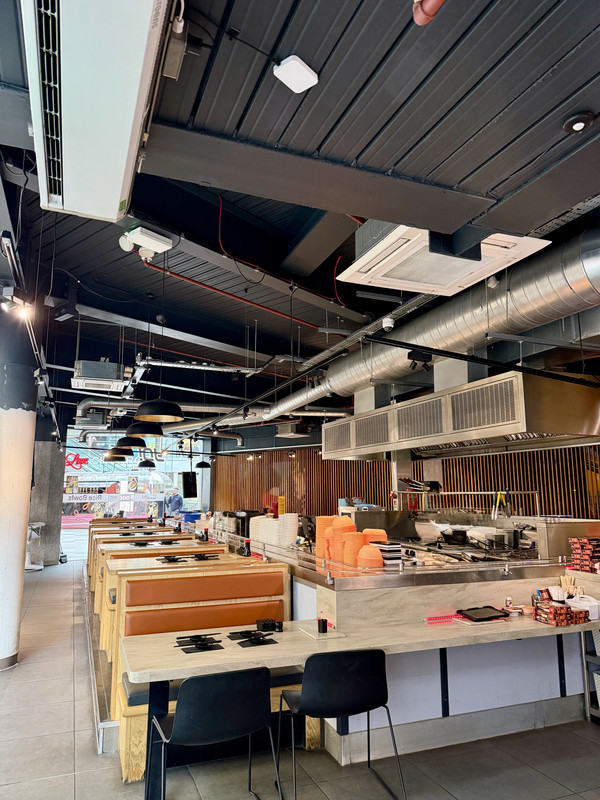
To capture these metrics, Pemberton Digital deployed a ceiling-mounted occupancy sensing system, mapping each seating location to a digital floor plan. Presence at each location—whether booths or stools—was recorded to Pemberton’s cloud analytics platform for reporting and analysis. YO! Sushi now has access to automated reporting, APIs, and data exports, enabling insights to be combined with existing POS and commercial data.
More than door counting – richer analytics providing a holistic view of in-store activity
Discreet and zero-touch – 100% private by design
Sensor to inbox – automated analytics and reporting
The result
YO! Sushi now has visibility into dine duration, group size, seating preference, and the utilisation and underutilisation of different seating types. Rather than providing a single snapshot, the data is time-mapped across trading weeks and months, delivering a more holistic view of store performance and trends. This allows YO! Sushi to make site-specific adjustments to product, stock, and staffing, improving overall operations and sales while minimising waste, resource use, and labour spend.
Why it works
The solution delivers accurate, seat-level in-store analytics without the use of cameras or personal data, meeting requirements around privacy, scale, and cost. Its ability to operate reliably across busy, open dining environments enables consistent customer counting and occupancy measurement over time, providing actionable behavioural insight through a simple, low-friction deployment.
^
-
A major food service operator required a shelf monitoring solution to better observe its large estate of grab-and-go kiosks. Operational constraints and patchy POS data limited its ability to monitor stock levels and product variety at scale. To improve visibility and reduce reliance on manual checks, Pemberton was engaged to develop a bespoke imaging solution tailored to the client’s unique operating environment.
The solution consists of a discreet, custom-designed camera and a cloud-based analytics platform. Cameras capture images at set intervals throughout the day, creating a visual record of shelf activity. Data is transmitted using NB-IoT, allowing the system to operate independently of existing store infrastructure and with near-zero installation burden. Once in the cloud, AI powered image analysis is used to identify stock gaps, assess product availability, and track performance over time.
All imagery and insights are delivered through a central platform, supporting automated reporting, historical review, and integration with existing operational and commercial systems. This provides a consistent, site-by-site view of performance without increasing workload at store level.
The result
The client now has clear, near real-time visibility into stock availability, product mix, and replenishment patterns across its estate. This insight supports better decision-making around production planning, waste reduction, and operational consistency, helping to improve sales performance while reducing stock-related losses.
Why it works
The solution combines low-friction imaging hardware with automated analytics to deliver scalable in-store visibility. By capturing objective data directly at source, it reduces reliance on manual reporting while providing a repeatable, auditable view of stock performance across large, distributed estates.
^
-
Many commercial operations struggle with unreliable connectivity, particularly in locations with weak or inconsistent signal. This limits access to cloud-based systems, dashboards, and operational tools, reducing the effectiveness of digital infrastructure in store and across distributed estates.
Pemberton Digital has developed a mobile connectivity solution designed to improve 4G and 5G performance in challenging environments. The system uses advanced antenna technology to maximise available signal and provide a more stable data connection where fixed-line services are unavailable, impractical, or unreliable. While originally developed for residential use, the solution has proven well suited to retail and commercial settings where dependable connectivity is critical to daily operations.
In addition to high-bandwidth mobile data, the solution supports NB-IoT for low-power, small-packet data transmission in areas where coverage is stronger but bandwidth is limited. Data can be intelligently routed between mobile networks and NB-IoT based on availability, resilience, and cost—using faster 5G where possible and more robust low-power connectivity where required. This approach gives operators a reliable, flexible connectivity layer to support in-store systems, remote monitoring, and operational reporting across large estates.
Improved 4G/5G coverage in low-signal retail and commercial environments
NB-IoT support for reliable, low-bandwidth data transmission
Intelligent data routing between mobile networks based on coverage, resilience, and cost
^